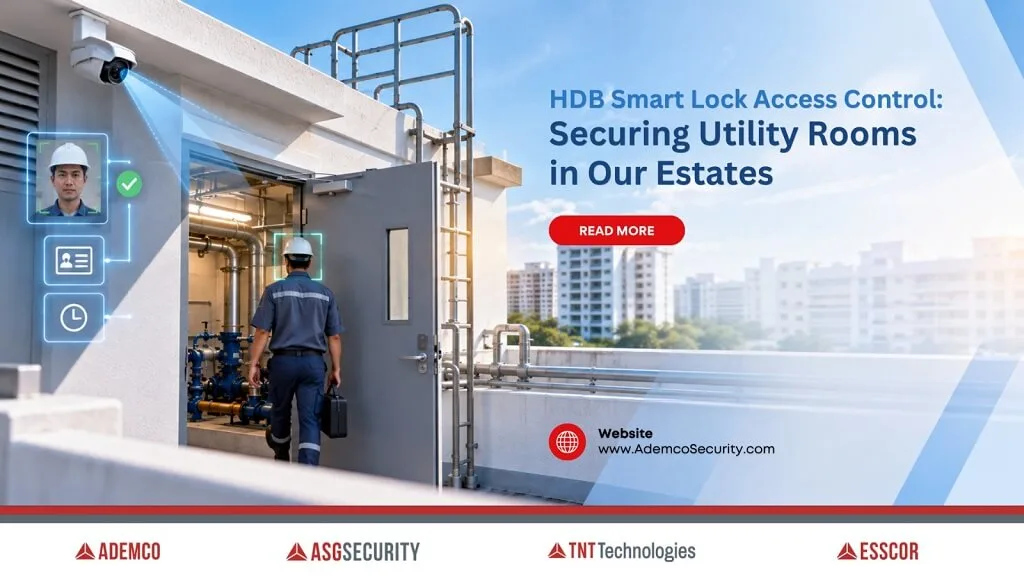
A contractor needs to service a pump room, but the physical key is kept in safekeeping by the Town Council. The contractor’s representative has to collect it first, and the checks before a key is handed over can differ from one Town Council to another. It’s the kind of process HDB smart lock access control can help address.
Put simply, smart lock access control can swap a physical key for a checked entry. The person is verified before the door opens, and the entry can be recorded for later review. In Ademco’s Fast & Secure Access (FSA) @ HDB solution, verification is multi-step and includes facial recognition and mobile verification, with access managed through a central portal.
In this article, we’ll walk through what smart lock access control involves, why utility and infrastructure spaces such as pump rooms, switch rooms, and rooftops are often restricted, and how FSA @ HDB handles entry to them.
What Is HDB Smart Lock Access Control?
HDB smart lock access control is a keyless way to manage entry to utility rooms in HDB estates, with access limited to people who have been authorised.
Ademco’s FSA @ HDB solution applies this approach to key infrastructure in HDB estates, such as pump rooms, switch rooms, and rooftops.
Why Does Pump Room Security Matter in HDB Estates?
Pump rooms and switch rooms often house equipment that supports everyday estate services, and servicing crews need to enter them from time to time. In HDB estates, Town Councils control, manage, and maintain the common property. HDB lists lifts and water tanks as part of it, and the Town Councils Act also covers pumps and motors.
Where physical keys are used, they are kept in safekeeping by the Town Council, so a contractor’s representative has to collect the key before work can start. The verification process before a key is handed over differs from one Town Council to another. A physical key does not check who is holding it, and it does not record when it was used, which can make it harder to establish who was present if something goes wrong. A smart lock system can do both, depending on how it is set up.
How Does Smart Lock Access Control Work in a Utility Room?
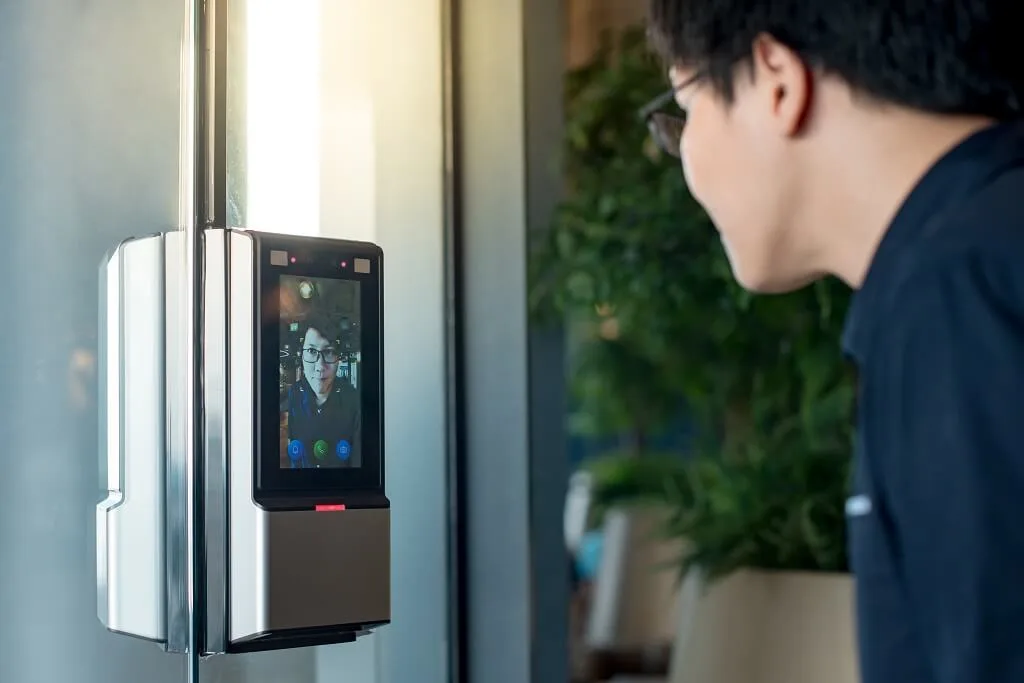
In the FSA @ HDB solution, the main elements are as follows:
- Access management. Agencies use a management portal to authorise and manage who has access. External parties, such as contractors, can submit and register for access through the same portal.
- Verification. Entry involves a multi-step process that includes facial recognition and mobile verification, so no physical key is needed.
- Monitoring and records. Entries are recorded in an audit trail, and the biometric database and entry logs are stored in a secure cloud environment. Ademco’s Central Monitoring and Command Centre (CMCC) monitors for anomalies such as intrusion alarms, tampering, and unattended or unsecured entry points.
| Physical key | FSA @ HDB smart lock | |
| Who decides who gets in | The Town Council, which keeps the keys and releases them under its own verification process | Agencies, through a management portal |
| Proof of identity at the door | None at the door; checks happen before the key is handed over | Multi-step: facial recognition and mobile verification |
| Record of each entry | Depends on the Town Council’s own records | Audit trail |
| Monitoring of the door | None from the key itself | Remote monitoring for anomalies such as tampering and unsecured entry points |
Frequently Asked Questions
Does FSA @ HDB use physical keys?
No. FSA uses a multi-step verification process that includes facial recognition and mobile verification, so it is designed to manage access without physical keys.
Who can be given access through the management portal?
Authorised personnel only. Agencies authorise and manage access through the portal, and external parties, such as contractors, can submit and register for access through the same portal.
Are entries to the room recorded?
Yes. Entries are recorded in an audit trail, so access can be tracked.
Can this approach protect rooms other than pump rooms?
Possibly. The solution is described for restricted areas such as pump rooms, switch rooms, and rooftops, and whether it suits another type of room depends on how the room is used and who needs entry. Fit is best confirmed with the solution provider.
Does the lock replace a monitoring team?
Not on its own. The lock manages entry, while remote monitoring (in this solution, by Ademco’s CMCC) watches for anomalies such as tampering and unsecured entry points. Someone still has to respond to what the system reports.
To find out more about how FSA @ HDB works, or to discuss access control for other restricted areas, contact us.